
Your website should do more than look beautiful. It should tell your story, build trust, showcase your value, and turn interested visitors into potential customers.
Let's start with a question.
When someone discovers your business on Instagram, Facebook, or Google, what happens next?
They click your profile. They like what they see. They're interested in learning more about your products or services.
But when they look for additional information, can they easily find what they need? Can they understand what makes your business different? Can they explore your services, view your work, read customer reviews, or make a purchase?
Most importantly, do they know what to do next?
These moments matter more than many business owners realize.
You can have an attractive social media page, a growing following, and engaging content, but if potential customers don't have a clear path to learning about or connecting with your business, you could be missing valuable opportunities.
Social media helps people discover your brand. A well-planned website gives them a place to explore it, understand your value, and take the next step.
The goal isn't simply to get more website visitors. It's to turn the right visitors into meaningful business opportunities.
Here's how to build a website that works harder for your business.
1. Why Your Small Business Needs More Than Social Media
Social media is an important part of modern marketing. It helps businesses build awareness, connect with audiences, share updates, and establish relationships with potential customers.
However, relying exclusively on social media means depending on platforms you don't control.
Algorithms change. Features evolve. Organic reach fluctuates. Your audience may not see every post you publish.
That's why having your own website can be such a valuable part of your business strategy.
Think of your website as your digital storefront: a central destination where customers can learn about your business, explore your offerings, and connect with your brand.
Here are five ways a professional website can support your growth.
1. Establish credibility and build trust
First impressions matter.
When potential customers visit your website, they begin forming an opinion about your business. A professional, organized, and easy-to-navigate website helps communicate that you take your business seriously.
It also gives you space to share your story, experience, customer testimonials, portfolio, and the values behind your brand.
Trust isn't created through appearance alone. It's built when your website communicates clearly and gives visitors confidence in what you offer.
2. Increase your online visibility
Your potential customers are searching for products, services, and solutions every day.
Search engine optimization (SEO) helps search engines understand your website and identify the topics and searches your content may be relevant to.
With useful content, relevant keywords, descriptive page titles, and a clear website structure, you can create more opportunities for people to discover your business through search.
3. Showcase your products and services
Your website gives your offerings room to stand out.
Instead of trying to fit everything into a social media caption, you can create dedicated pages that explain your services, display your products, answer common questions, and communicate what makes your business worth considering.

4. Generate inquiries, bookings, and sales
A website can support your business even when you're not actively posting on social media.
With strategically placed calls to action, contact forms, appointment booking tools, and e-commerce features, visitors can take the next step when they're ready.
5. Create a digital destination you manage
Your website gives your business a central online home where you can organize your brand, publish content, collect inquiries, and build relationships with your audience.
Social media and your website should work together—not compete with each other.
Remember: Social media can introduce people to your business. Your website helps them understand why they should choose it.
2. Choosing the Right Website Platform for Your Business
One of the biggest misconceptions about building a website is that it has to be complicated or extremely expensive.
Today, several website-building platforms allow small business owners to establish a professional online presence without advanced coding skills.
However, the right platform depends on your business model, goals, budget, and the features you need.
Here are three popular options worth exploring.
Wix: Flexibility for Growing Small Businesses
Wix offers customizable templates, visual design tools, and a variety of business features.
It's worth considering for:
Service-based businesses.
Beauty salons and wellness professionals.
Consultants and independent entrepreneurs.
Small businesses looking for flexible website features.
What makes it appealing?
Wix offers tools for building service pages, showcasing portfolios, collecting inquiries, accepting bookings, and creating online stores.
It's a flexible option for businesses that need several different features in one place.
Squarespace: Professional Design Meets Brand Identity
Squarespace is known for its polished templates and design-focused website experience.
It's worth considering for:
Creative entrepreneurs.
Photographers and designers.
Beauty and lifestyle brands.
Consultants and service providers.
What makes it appealing?
Squarespace makes it easier to create visually cohesive websites with professional layouts, portfolio pages, blogging features, and e-commerce capabilities.
It's particularly useful for brands that want their online presence to reflect a strong visual identity.
Shopify: Designed for Businesses Ready to Sell Online
If selling products online is your primary business objective, Shopify is worth considering.
It's designed around e-commerce and online retail.
It's a good option for:
Clothing and fashion boutiques.
Beauty and skincare brands.
Specialty product businesses.
Entrepreneurs building an online store.
What makes it appealing?
Shopify provides tools for product listings, inventory management, payment processing, order management, and online checkout.
It's built to support businesses managing an online retail operation.
Which Platform Is Right for Your Business?
There isn't one perfect platform for everyone.
Before choosing, consider what you need your website to accomplish.
Are you trying to generate appointment bookings? Showcase your portfolio? Sell downloadable products? Manage an online store?
Choose a platform that supports your business goals—not simply the one with the prettiest template.
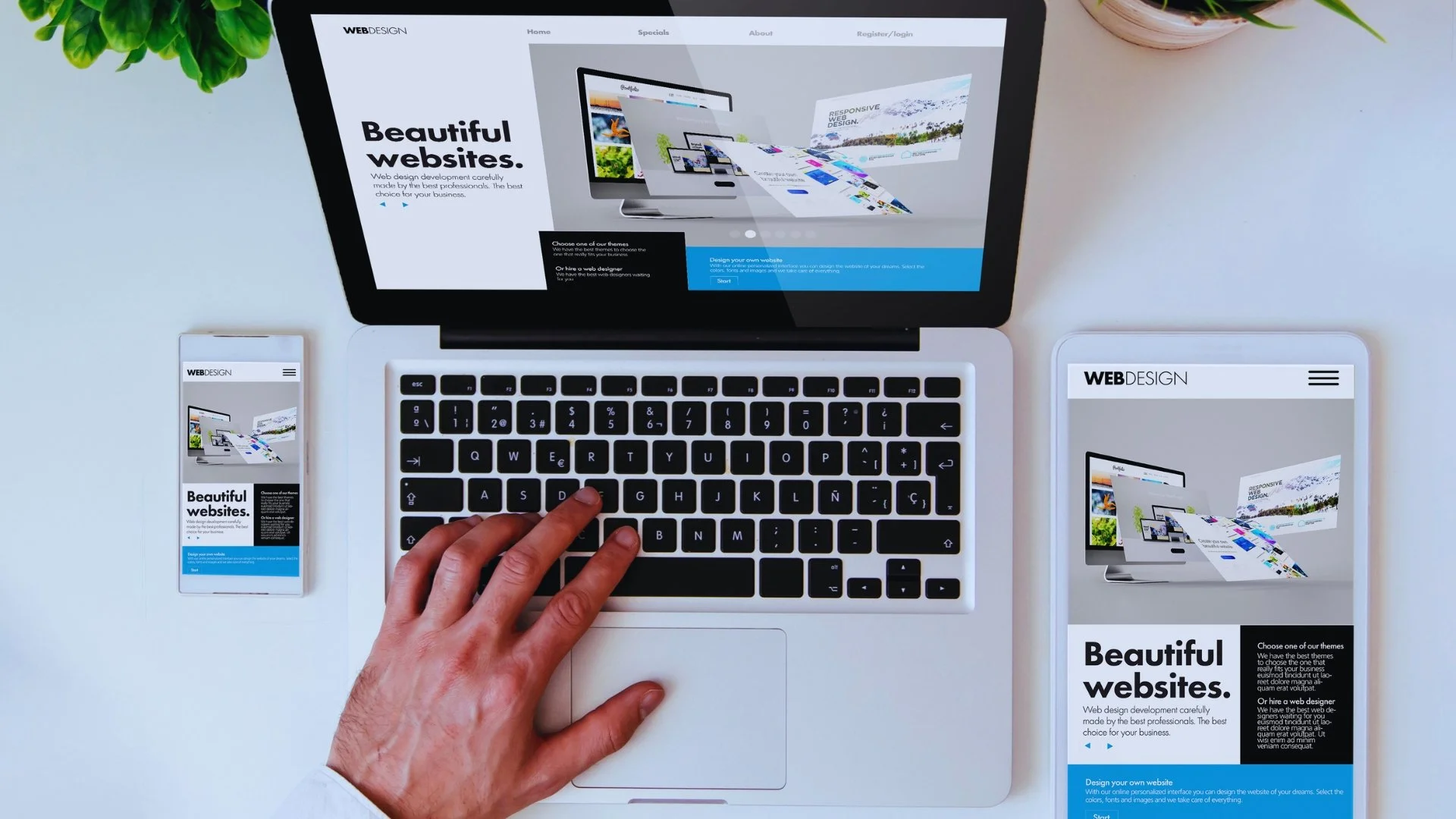
The platform is only the foundation. The strategy behind your website is what makes the experience effective.
3. Five Essential Elements of a Website That Attracts, Connects & Converts
Here's where the real strategy begins.
A beautiful website might capture someone's attention, but design alone doesn't guarantee inquiries, bookings, or sales.
Your website needs to communicate the right message, create a positive experience, and guide visitors toward a clear next step.
Let's look at five essential elements.
1. SEO: Make It Easier for Customers to Find You
You can have an outstanding website, but if potential customers can't discover it, you're missing an opportunity.
Search engine optimization, commonly known as SEO, helps search engines understand your website and determine which searches your content may be relevant to.
A thoughtful SEO foundation includes:
Relevant keyword research.
Descriptive page titles and meta descriptions.
Clear headings and website organization.
Location-based keywords for businesses serving specific communities.
Descriptive image alt text.
Helpful, original website content.
Mobile-friendly design and good website performance.
Here's a practical example.
Imagine you own a hair salon in Charlotte, North Carolina.
A generic page title such as "Our Services" doesn't tell visitors or search engines very much.
A more descriptive title might be:
"Professional Hair Salon Services in Charlotte, NC."
This communicates the type of business and the location it serves.
You can also create useful blog content around questions your customers are already asking, such as:
How often should you schedule a professional hair treatment?
What should you look for when choosing a hair salon?
Which hair services are best for your hair goals?
The key is to create content that genuinely helps your audience.
SEO takes time, and no strategy can guarantee a particular search ranking. However, consistently publishing relevant, helpful content creates a stronger foundation for long-term visibility.
2. Headlines and Website Copy That Connect With Your Audience
When someone lands on your homepage, they shouldn't have to guess what your business does.
Within a few seconds, visitors should be able to understand:
Who you are.
What you offer.
Who you help.
How to take the next step.
Your headlines should be clear, engaging, and relevant to your audience.
For example, instead of:
"Welcome to Our Business."
Consider:
"Helping You Look Your Best With Professional Hair Care and Personalized Styling."
The second headline communicates what the business offers and gives visitors a reason to keep exploring.
Here's another important principle:
Don't just describe what you do. Explain why it matters to the customer.
Instead of focusing exclusively on your business, focus on the problems you help solve, the needs you address, and the value customers receive.
Your website copy should make visitors feel that they've found a business that understands what they're looking for.
3. Product and Service Descriptions That Communicate Value
Your product and service descriptions can influence whether someone continues browsing or decides to make a purchase.
A common mistake is focusing only on features instead of explaining the benefits.
For example, consider this product description:
"Hydrating Facial Moisturizer – 8 oz."
It tells customers what the product is, but it doesn't explain why they might want it.
A more engaging description could be:
"Give your skin the daily hydration it deserves. This lightweight facial moisturizer helps replenish moisture while leaving skin feeling soft, smooth, and refreshed. Add a nourishing step to your everyday skincare routine."
The second description communicates more context and helps customers understand the potential value of the product.
The same principle applies to service-based businesses.
Rather than simply listing "Marketing Consultation," explain what customers can expect, who the service is designed for, and how it can help them.
A strong service description answers three questions:
What is included?
Who is this service for?
What value can the customer expect?
When customers understand what they're considering, they can make more informed decisions.
4. Professional Design and a Seamless Mobile Experience
Your website is an extension of your brand.
Its appearance should reflect your business personality, communicate professionalism, and create a positive experience.
But effective website design goes beyond beautiful colors, fonts, and photographs.
Your website should also offer:
Easy-to-understand navigation.
Consistent branding and visual elements.
Clear, readable content.
High-quality, relevant imagery.
Fast-loading pages.
Mobile-friendly layouts.
Easy access to contact information.
Clear and visible calls to action.
Don't overlook mobile design.
Many people discover businesses while browsing on their phones.
If your text is difficult to read, your buttons are hard to find, or your website takes too long to load, visitors may leave before exploring what you offer.
Before publishing your website, review it on both desktop and mobile devices.
Ask yourself: If I were a potential customer, could I easily find what I need?
5. Strategic Calls to Action That Encourage Action
One of the biggest website mistakes is making visitors figure out what to do next.
Your website should guide people through their experience and make the next step obvious.
A call to action (CTA) is a short instruction that encourages a visitor to take a specific step.
Depending on your business, that might be:
Book Your Appointment.
Shop Our Collection.
Request a Free Quote.
Schedule a Consultation.
Explore Our Services.
Download Your Free Guide.
Contact Our Team.
A good CTA is clear, specific, and relevant to the page.
For example, a salon's service page might feature "Book Your Appointment," while a consultant's homepage might feature "Schedule Your Free Consultation."
Don't make visitors search for your contact information or wonder how to work with you.
Make the next step easy to find, easy to understand, and easy to complete.

4. Your Website Should Work With Your Marketing Strategy, Not Against It
Here's something every small business owner should understand:
Your website shouldn't operate in isolation.
It should be part of a larger marketing strategy that connects your brand, social media, search visibility, and customer experience.
Think about how these elements work together.
Social Media + Website
Use Instagram and Facebook to introduce your brand, share helpful content, build relationships, and direct interested followers to relevant pages on your website.
For example, a beauty professional could share a short educational video about a popular service and direct viewers to a website page where they can learn more or book an appointment.
SEO + Website Content
Publish helpful blog articles and optimize your website pages around relevant topics and search terms your potential customers are looking for.
Useful content can help answer questions, demonstrate expertise, and create additional opportunities for discovery.
Branding + Website Design
Maintain consistent colors, typography, messaging, and imagery across your website and social media platforms.
Consistency helps people recognize your business and creates a more cohesive brand experience.
Email Marketing + Website
Give visitors opportunities to subscribe to your newsletter, receive updates, and stay connected with your business.
Email marketing allows you to continue building relationships with people who have expressed interest in your brand.
When these channels work together, you create more opportunities for customers to discover, recognize, and engage with your business.
The goal isn't to have the most marketing platforms.
The goal is to make every part of your online presence work toward the same business objectives.
5. Five Website Mistakes That Could Be Costing Your Business Customers
Even businesses with attractive websites can lose potential customers because of small but important oversights.
Here are five issues worth checking.
1. Your homepage doesn't clearly explain what you do.
Visitors shouldn't have to search through multiple pages to understand your business.
Make your primary service or product clear from the beginning.
2. Your website is difficult to navigate.
Complicated menus, confusing page layouts, and missing contact information create unnecessary friction.
Keep navigation simple and intuitive.
3. Your website focuses on your business instead of your customer.
Your experience and story matter, but visitors also want to know how your products or services can help them.
Communicate the customer value throughout your website.
4. Your website doesn't have clear calls to action.
If visitors don't know how to book, buy, inquire, or contact you, they may leave without taking action.
Give each important page a clear purpose and next step.
5. You aren't reviewing your website performance.
A website shouldn't be something you build once and forget.
Review your traffic, visitor behavior, inquiries, bookings, and sales. Look for pages that attract attention but don't encourage action.
Sometimes a clearer headline, a more visible button, or a better service description can make a meaningful difference.
6. How Blooms & Blossom Creative Co. Helps Small Businesses Build a Stronger Digital Presence
At Blooms & Blossom Creative Co., we believe every small business deserves access to thoughtful marketing and creative services that help its brand stand out.
You don't need to be a large corporation to present your business professionally.
And you shouldn't have to navigate every marketing decision alone.
Our approach brings creative design and practical marketing strategy together to help small businesses communicate their value, strengthen their brand identity, and create more meaningful connections with their audiences.
We offer personalized support in areas such as:
Strategic Website Design
We help businesses create visually appealing, user-friendly websites that reflect their brand identity, showcase their offerings, and make it easier for visitors to take action.
SEO-Focused Website Content
From relevant keywords and page titles to engaging headlines and website copy, we help businesses create content with their audience and online visibility in mind.
Product and Service Descriptions
We develop thoughtful descriptions that communicate the value of your offerings and help potential customers understand what makes your business worth considering.
Brand Messaging and Positioning
We help businesses communicate what makes them unique through consistent messaging, thoughtful content, and a recognizable brand experience.
Conversion-Focused Website Strategy
We look beyond appearance and consider the customer journey—from the first click to the next action. The objective is to make it easier for visitors to connect, inquire, book, or shop.
We don't believe in a one-size-fits-all approach.
Every business has its own story, audience, challenges, and goals. Our focus is on helping business owners find creative, practical solutions that make sense for their needs and budget.
Because great marketing isn't about doing everything. It's about doing the right things with purpose.
Ready to Turn Clicks Into Customers?
You don't need thousands of followers or an enormous marketing budget to build a recognizable business.
You need a clear message, a professional online presence, and a customer experience that makes people feel confident about choosing your brand.
Your website is an opportunity to make a lasting first impression, establish credibility, showcase your expertise, and create meaningful connections with the people you want to reach.
Take a moment to look at your own website.
Does it clearly communicate what you offer? Does it reflect the quality of your brand? Can visitors easily find the information they need and take the next step?
If the answer is no, it may be time to rethink your online presence.

Don't just build a website. Build a digital experience that moves your business forward.
At Blooms & Blossom Creative Co., we're here to help small businesses bring their ideas to life through personalized marketing consultation and creative design services.
Whether you're starting from scratch or ready to improve your existing website, let's talk about how to make your online presence work harder for your business.
Ready to take the next step?
Schedule your free 30-minute consultation and let's explore what's possible for your brand.
Blooms & Blossom Creative Co.
Simple. Personal. Purposeful.
Your Website Growth Checklist
Before you publish, use this quick checklist to evaluate your website:
My homepage clearly explains what my business offers.
My website reflects my brand identity.
My services and products are easy to understand.
My website is easy to navigate on mobile and desktop.
My page titles and descriptions are relevant.
My contact information is easy to find.
My website includes clear calls to action.
My customer reviews or testimonials are visible where appropriate.
My website has a clear path to booking, purchasing, or making an inquiry.
I review website performance and track meaningful results.
A website is not simply a place to display your business. It's a tool for communicating your value, building relationships, and supporting growth.
